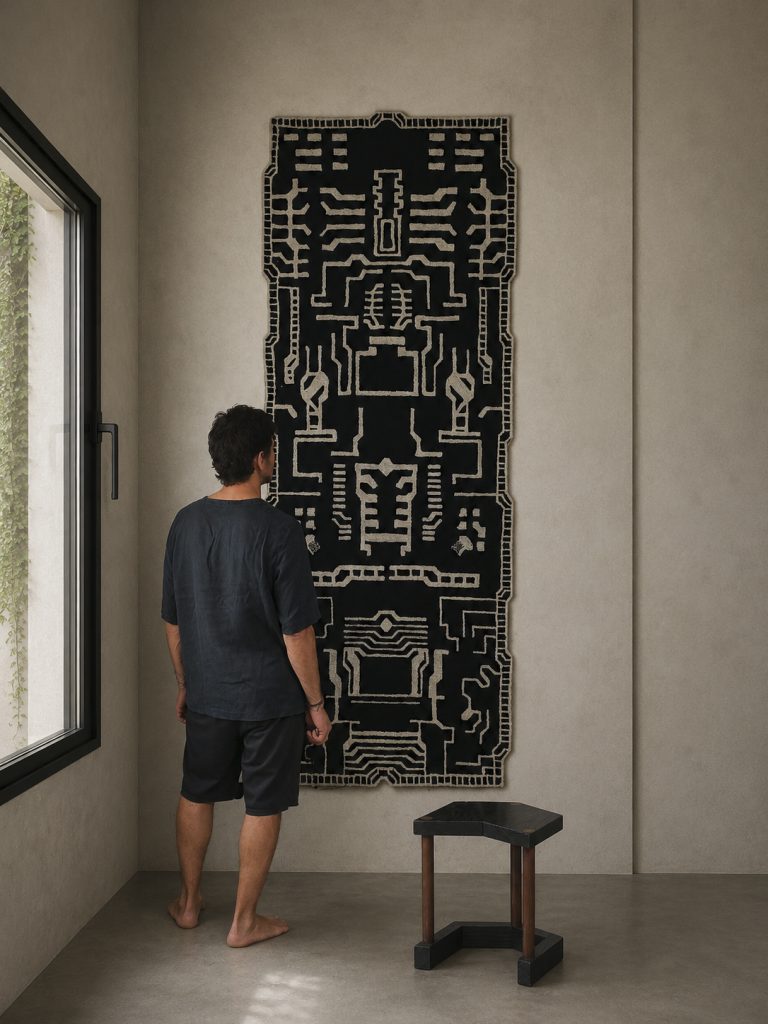
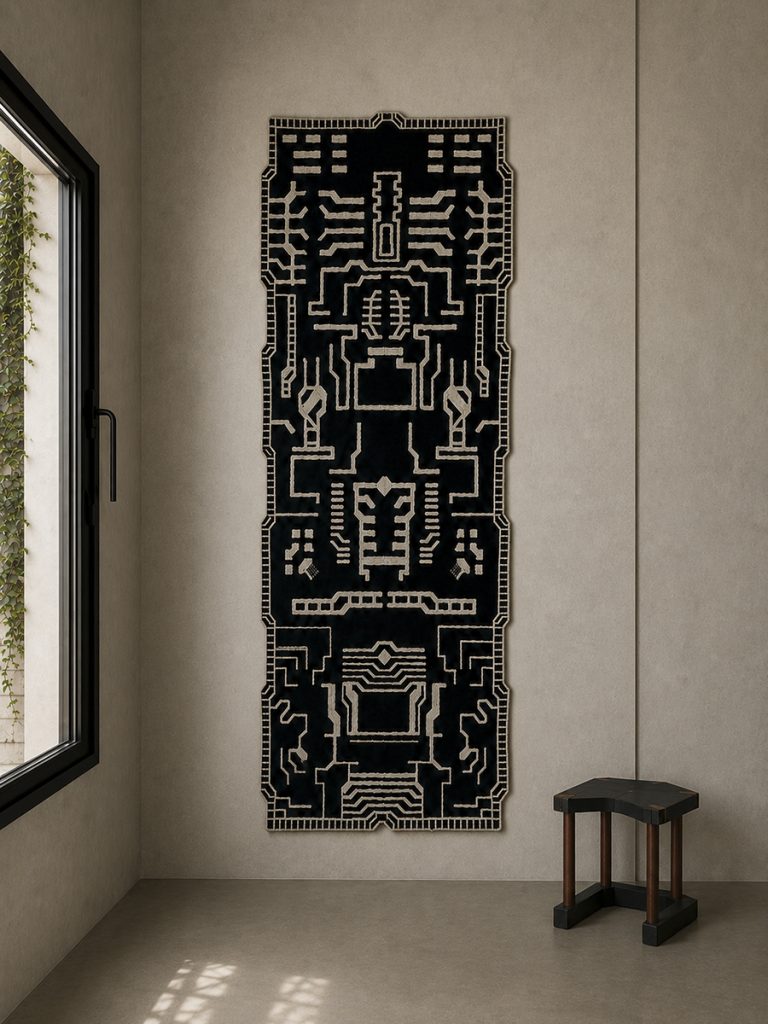
Fragmento 01. Sector A

The construction of form begins with the material, approaching the object not as something predefined, but as a need for materialisation that emerges during the process.

We are interested in the moment when drawing ceases to be representation and becomes a structure, an object that operates within our inhabitable space and conveys meaning.

Fragment 01. Sector A arises from that need to trace, to organise and to narrate a territory of our own. We are drawn to the idea of the map, not only as a tool for orientation, but as a record of a path, of the memory of a construction that is not fully defined.

The piece is constructed as a surface that can be visually traversed and read as a territory.

La construcción de la forma parte del material, tratando de entender el objeto no como algo previo, sino como una necesidad de materialización que aparece durante el proceso.

Nos interesa el momento en el dibujo deja de ser representación y se convierte en una estructura, un objeto que aporta dentro de nuestro espacio habitable y transmite un mensaje.

Fragmento 01. Sector A surge desde esa necesidad de trazar, de ordenar y narrar un territorio propio. Nos mueve la idea de mapa, no por el hecho de ser una herramienta de orientación, que también, sino como registro de un recorrido, de la memoria de una construcción que no está completamente definida.

La pieza se construye como una superficie que puede ser recorrida visualmente y leída como un territorio.

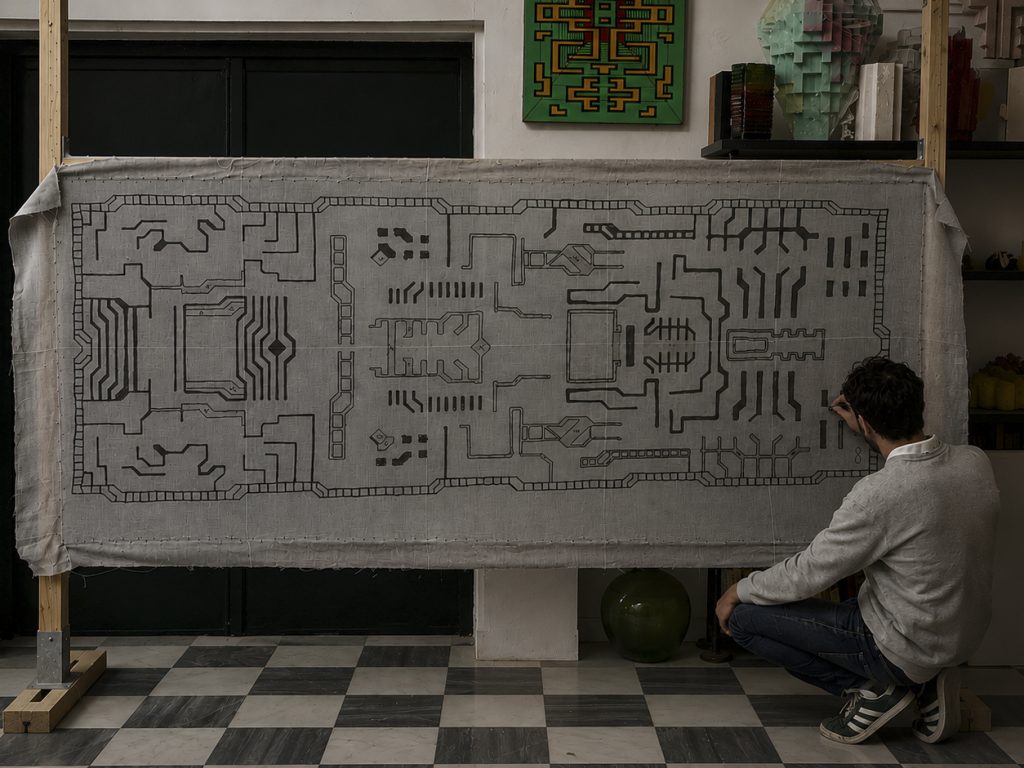
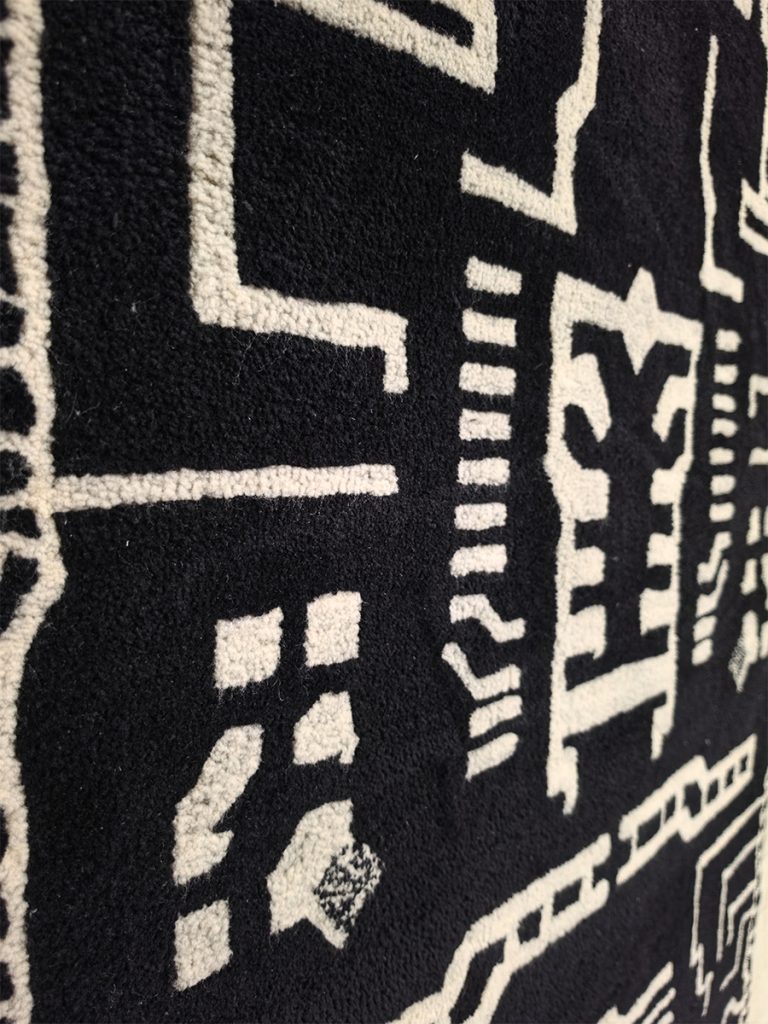
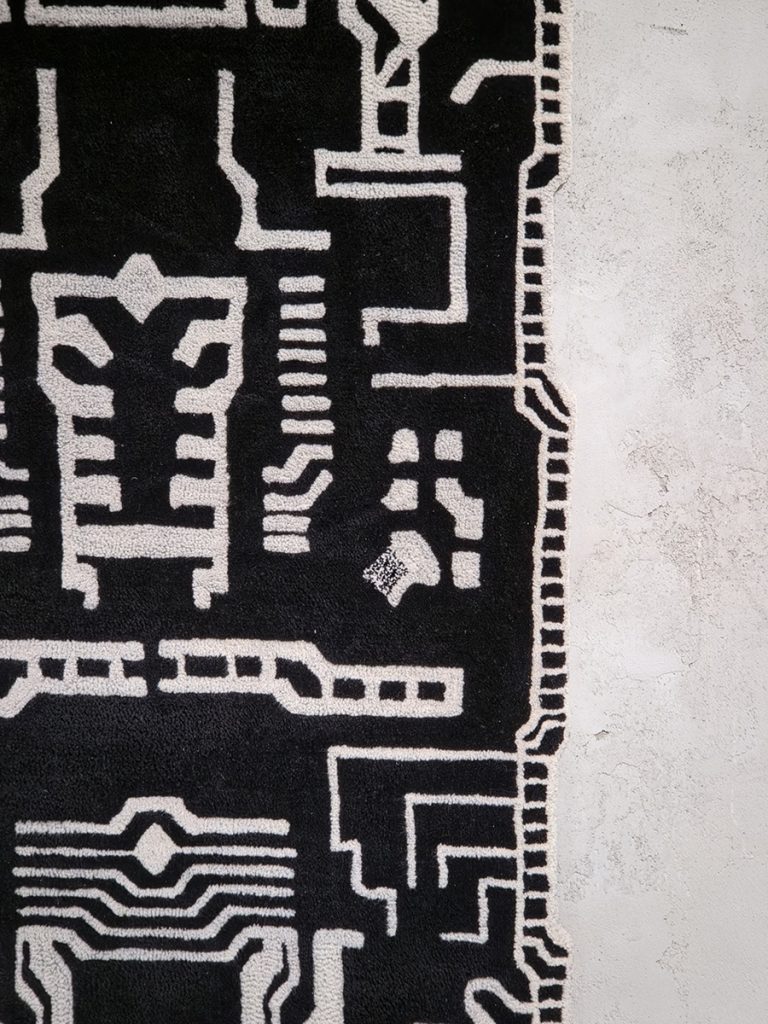
The work can be read as a plan in which areas emerge that suggest routes, boundaries, access points or internal divisions. Some parts refer to elemental architectural configurations, such as walls, stairs or corridors, while others function as connections between these elements. The path is personal and intimate, an open mental state.

We are interested in how these surfaces are inserted into architecture, how they engage with floors, walls and pathways.

La obra puede leerse como un plano en el que aparecen zonas que sugieren recorridos, límites, accesos o divisiones internas. Algunas partes remiten a configuraciones arquitectónicas elementales, como muros, escaleras, o pasillos, mientras que otras funcionan como conexiones entre estos elementos. El recorrido es personal e íntimo. Un estado mental abierto.

Nos interesa cómo estas superficies se insertan en la arquitectura, cómo dialogan con suelos, paredes y recorridos.

Territory without time in an open system

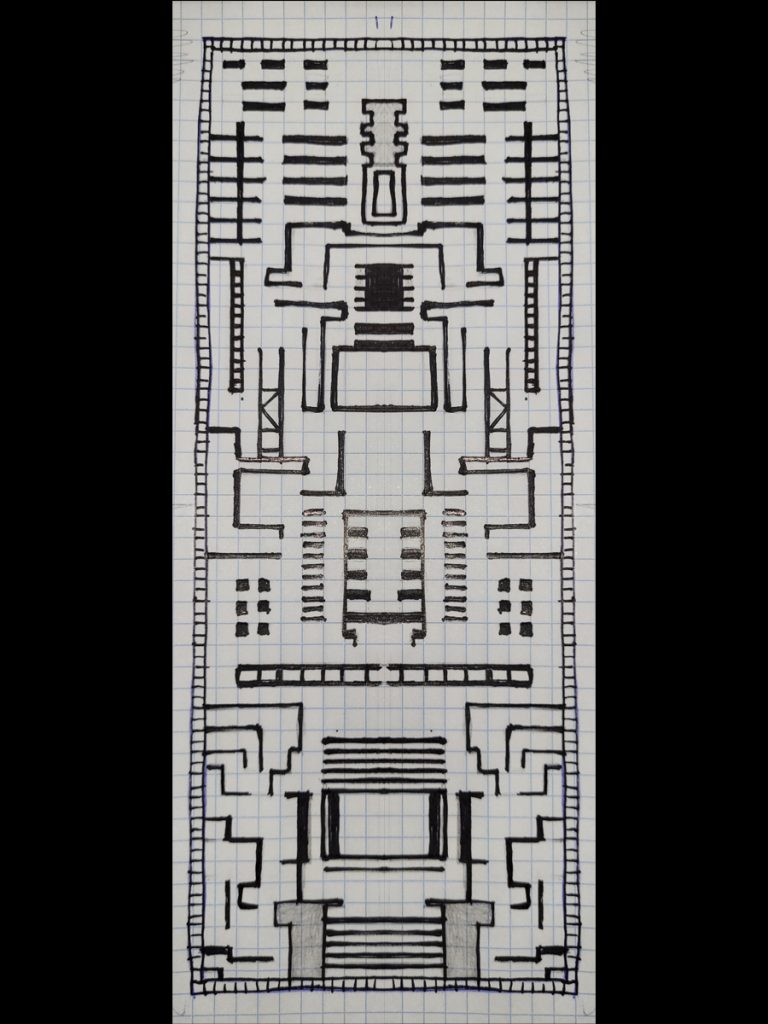
Fragment 01. Sector A is a textile piece made from sheep’s wool using a manual tufting technique. The work begins with a design developed in the studio and transferred directly onto the surface.

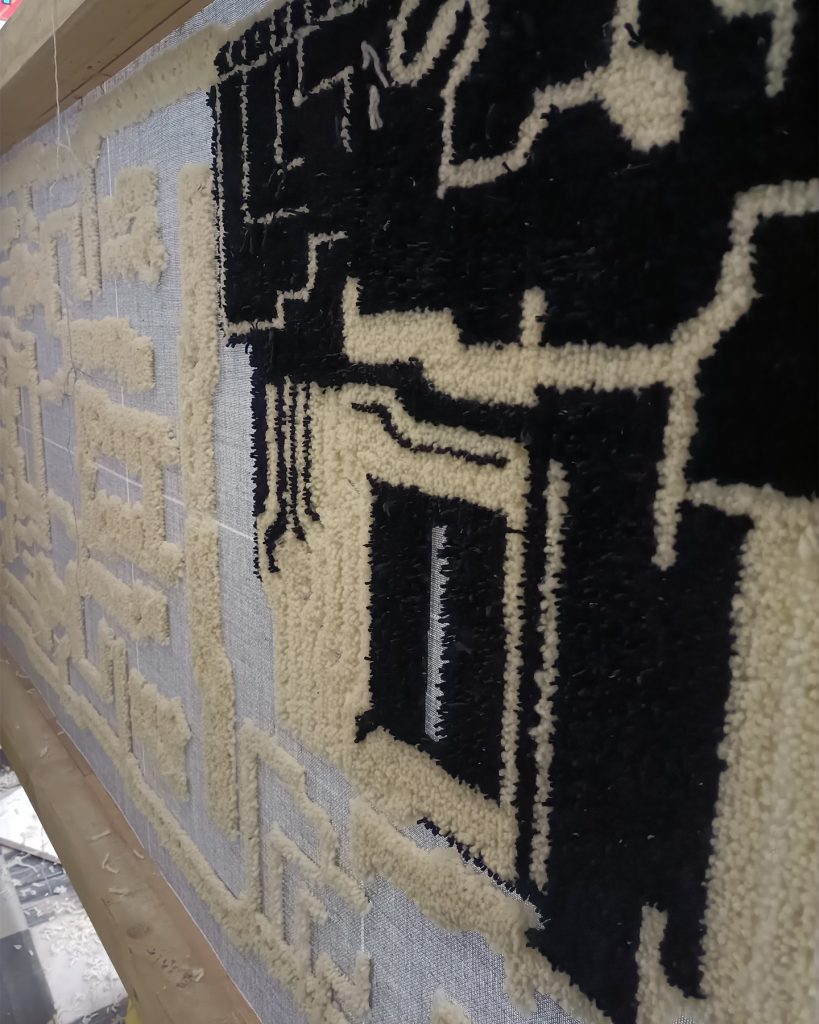
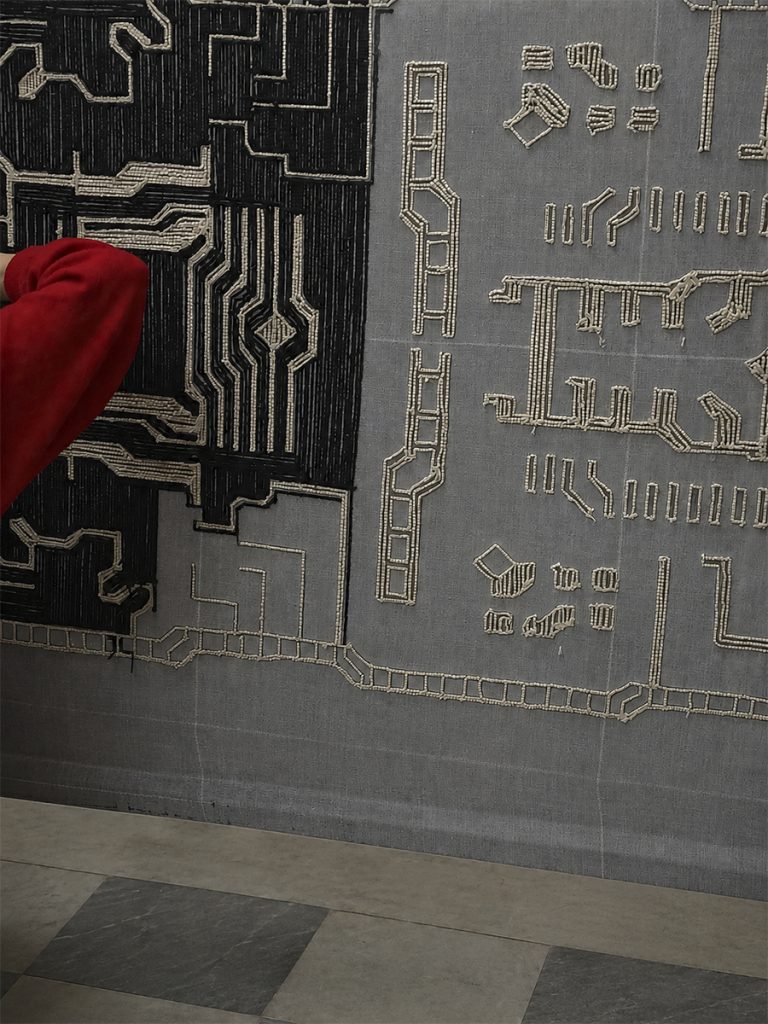
The piece is built on a continuous black ground, from which white wool lines emerge, defining a system of geometric forms. The manual process allows for small variations in the path, thickness and continuity of the drawing.

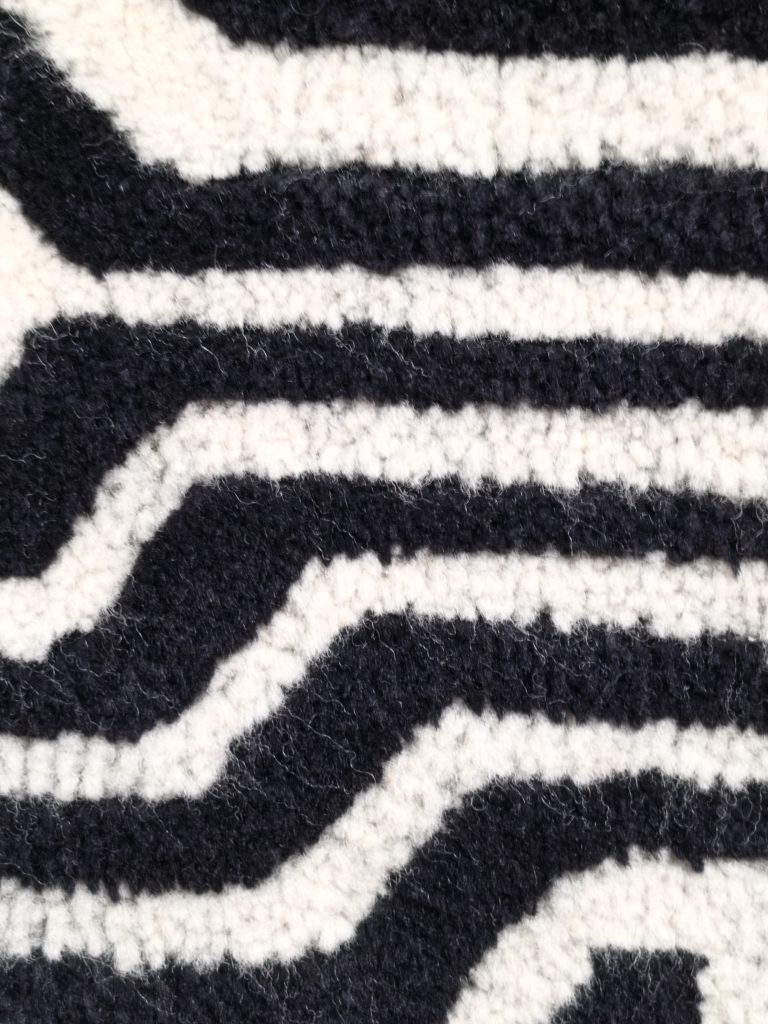
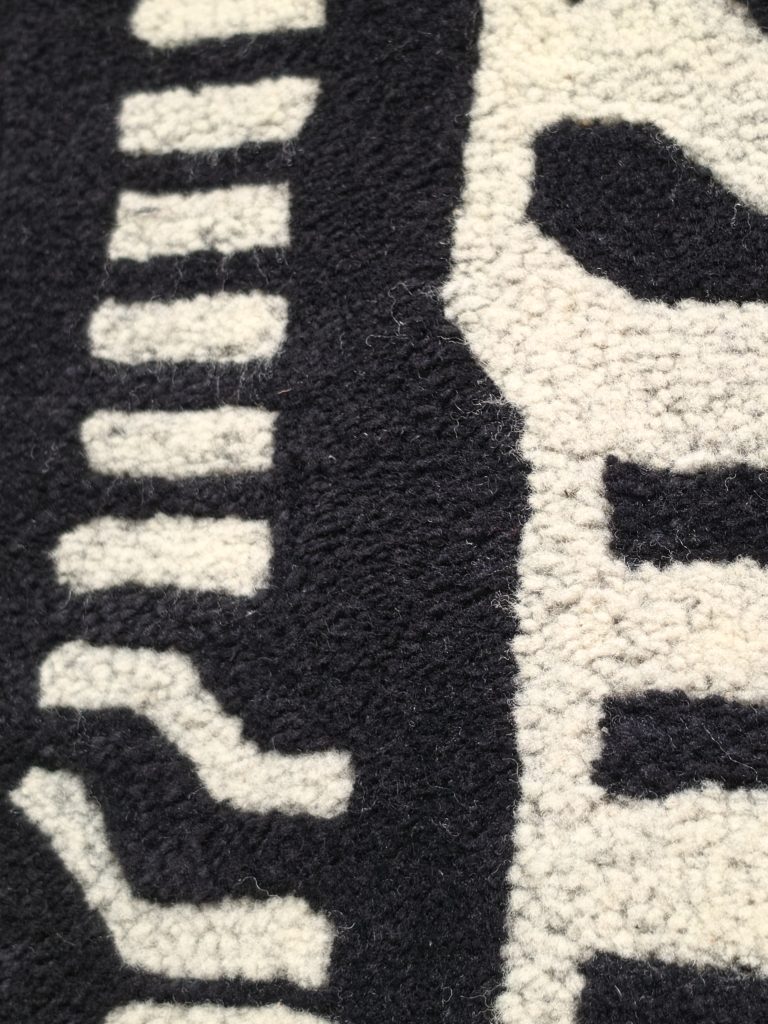
The decision to use natural wool introduces another variation in the form, avoiding the uniformity of industrial colour and allowing the surface to retain a constant vibration.

Texture is another fundamental element. Manual tufting produces a dense surface with a soft relief that alters the perception of the drawing depending on light and distance. Up close, the fibre and texture are visible; from afar, the image recovers its graphic character.

Territorio sin tiempo en un sistema abierto

Fragmento 01. Sector A es una pieza textil realizada en lana de oveja mediante técnica de tufting manual. El trabajo parte de un diseño propio desarrollado en el estudio y trasladado directamente a la superficie.

La pieza parte de un fondo negro continuo, sobre el que emergen líneas en lana blanca que definen un sistema de formas geométricas. El trazo manual nos permite introducir pequeñas variaciones en el recorrido, en el grosor y en la continuidad del dibujo.

La decisión de utilizar lana natural, incorpora una variación más en la forma, ya que evita la uniformidad del color industrial y permite que la superficie conserve una vibración constante.

La textura es otro elemento fundamental. El tufting manual genera una superficie densa, con un relieve suave que modifica la percepción del dibujo según la luz y la distancia. De cerca se lee la fibra y la textura, de lejos, la imagen recupera su carácter gráfico.

Fragment 01. Sector A is part of a line of work in which the studio translates its formal research into the textile field.

Working with tufting allows for a direct relationship between hand and form. The drawing is executed line by line, generating small variations that define the final piece. These variations form part of the object’s character, unique, with an ancestral quality that feels removed from a fixed moment in time, as evoked by the studio.

Fragmento 01. Sector A se inscribe dentro de una línea de trabajo donde el estudio traslada sus investigaciones formales al ámbito textil. 

El trabajo con tufting permite mantener una relación directa entre mano y forma. El dibujo se ejecuta línea a línea, generando pequeñas desviaciones que marcan la pieza final. Estas variaciones forman parte del carácter del objeto, único, de carácter ancestral y perdido en el tiempo que evoca el estudio.